
Dubai is among the cities in which you can feel time advancing—not in years, but in single years. What was once an unassuming trading hub can now be a futuristic, dazzling skyline packed with architectural marvels, amazing engineering feats, and an urbanisation level that seems impossible.
While photos taken from the ground only tell the most visible aspects of Dubai’s story, the full story becomes apparent from above. A drone or helicopter view of the evolution of Dubai’s skyline reveals how dramatically the city’s structure, landmarks, layout, and design have changed. From the earliest days of low-rise structures on Dubai Creek to today’s dense high rises, luxury islands, and megaprojects, the aerial view depicts a dramatic “before and after” that can’t be described in words.
This guide will explore Dubai’s architectural heritage from the air, comparing iconic landmarks such as Burj Khalifa and Burj Al Arab, showing how old Dubai appeared in aerial photos, and describing the rapid development that reshaped the landscape.
The Beginning: Dubai Before the Boom (Old Dubai Helicopter View)
If you took a helicopter through Dubai in the 70s or 80s, the city would appear impossible to recognize today. The skyline was largely unrecognizable. There were no glass towers, artificial islands, or modern highways. Instead, you would see:
-
Flat desert stretches endlessly.
-
Low-rise houses close to the creek.
-
Traditional dhow boats lined the waters.
-
Commercial buildings that weren’t widely known.
-
A city that was still developing in its earliest stages.
The old Dubai, from above, was characterized by its simplicity. Daily activity revolved around Dubai Creek, where trade, fishing, and early commerce shaped life. The aerial view depicts a peaceful, sprawling city with huge vacant land—the future locations of Downtown Dubai, Dubai Marina, Palm Jumeirah, Business Bay, and more.
This contrast is what makes Dubai an iconic destination for dramatic “before and after” transformations.
The Rise of Icons: Burj Al Arab, Palm Jumeirah & The First Wave of Urban Growth
Dubai’s first major shift in its skyline occurred in the latter half of the 1990s and into the early 2000s. From the air, these changes were dramatic and symbolic.
1. Burj Al Arab – The First Visual Game Changer
Construction began in 1999 and was completed the same year. Burj Al Arab became Dubai’s first global landmark. A helicopter view reveals why it was a game-changer:
-
It is situated on its very own island.
-
The sail-shaped structure stands out against the natural coastline.
-
The surrounding area was mostly uninhabited at the time.
From above, Burj Al Arab showed that Dubai was constructing not just buildings, but iconic symbols.
2. Palm Jumeirah – Aerial Engineering Nearly Impossible to Believe
From the surface, Palm Jumeirah is impressive. From the air, it’s jaw-dropping. The symmetrical palm-shaped design carved directly into the ocean can only be fully appreciated from above.
-
Before: Flat ocean
-
After: A huge palm-shaped island surrounded by resorts, villas, and towering skyscrapers
Dubai demonstrated how nature can be reshaped by human engineering.
The New Era: Burj Khalifa and the Vertical Expansion of Dubai
The most dramatic transformation visible from the sky is Downtown Dubai. Before 2004, the area was nothing more than open desert. Then came a new project that transformed the skyline forever: Burj Khalifa.
Burj Khalifa vs. Burj Al Arab: Aerial Comparison
| Feature | Burj Khalifa | Burj Al Arab |
|---|---|---|
| Height | World’s tallest building, 321 meters | Luxury hotel |
| Location | Downtown Dubai | Jumeirah Beach |
| Aerial Impact | Dominates the skyline from every angle | Stands out sculpturally against the coast |
| Urban Context | Surrounded by skyscrapers, Dubai Mall, and fountains | Isolated on its island |
From a helicopter:
-
Burj Khalifa rises above all surrounding buildings.
-
Burj Al Arab looks sculptural and artistic, framed by the coastline.
These two icons represent two distinct aspects of Dubai’s growth: luxury and global ambition vs. vertical architectural achievement.
“If you want to compare perspectives, check out the Best Dubai Views: Burj Khalifa Deck vs Helicopter Ride to help decide which experience suits you better.”
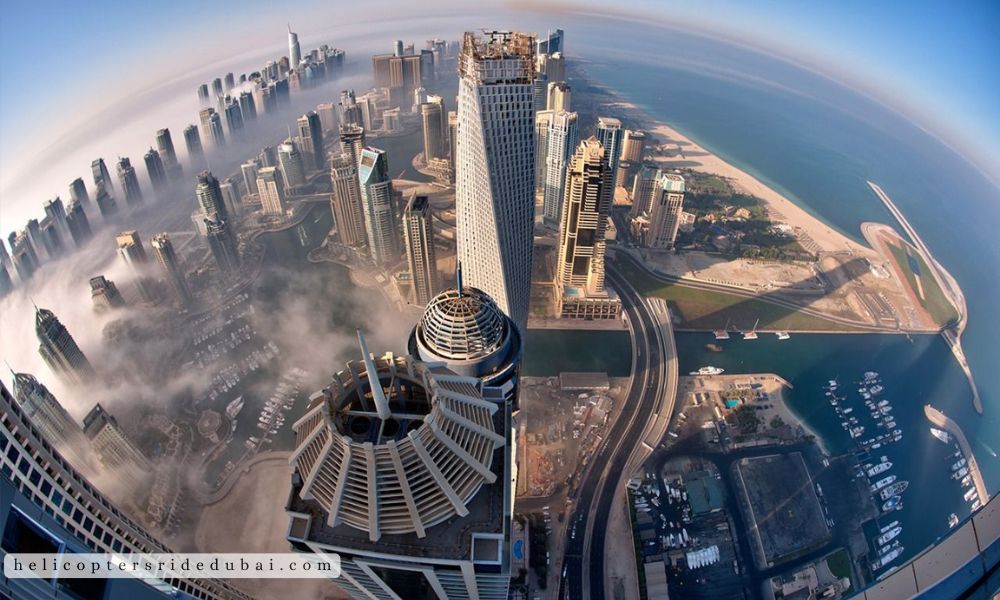
Dubai Marina & JBR: A New Urban Wall Seen From Above
Another striking “before and after” transformation is Dubai Marina.
Before:
-
Natural, empty desert coastline
-
No towers or community
-
No signs of future development
After:
-
Extensive skyscraper clusters
-
Curved man-made waterways inspired by canals
-
Marinas and luxury yachts
-
JBR’s beachfront buildings forming an impressive skyline
A helicopter view reveals details impossible to appreciate from the ground.
Experience the stunning skyline from above with a Dubai Marina helicopter tour and see the luxury waterfront like never before.
Rapid Urban Development: How Dubai Built a Skyline in Record Time
Dubai’s transformation didn’t take centuries—it happened in just 40 years. Aerial time-lapse photos show:
-
New roads appearing in once-empty desert
-
Towers rising in clusters rather than individually
-
Offshore islands forming
-
Residential districts expanding outward in rings
-
Continuous construction reshaping the coastline
This rapid growth makes the city’s helicopter view truly stunning. Dubai expanded upwards, outwards, and even across the sea.
Skyline Transformation Comparison: Then vs. Now
| Area | Then | Now |
|---|---|---|
| Downtown Dubai | Flat desert | Burj Khalifa, Dubai Mall, lakes, fountains, supertall towers |
| Jumeirah Coastline | Natural beach | Burj Al Arab, luxury resorts, artificial islands |
| Dubai Marina | Barren shoreline | One of the most photographed skylines in the world |
| Palm Jumeirah | Open sea | Beautifully designed palm-shaped island, visible fully only from above |
| Old Dubai | Central area of the city | Cultural counterbalance to the modern skyline |
Dubai today uniquely combines history and modernization.
Why a Helicopter View Is the Best Way to Understand Dubai’s History
Aerial views provide a perspective that ground-level photos cannot:
-
Stark contrast between Old Dubai and New Dubai
-
Exact geometrical structure of Palm Jumeirah
-
Vertical rise of Burj Khalifa
-
Luxurious coastline around Burj Al Arab
-
Dense commercial and residential clusters of Dubai Marina
-
Spread of desert into urban areas
From the air, you don’t just see buildings—you see the story of a city that has reinvented itself.
Conclusion: A Skyline That Continues to Change
Dubai’s skyline is never complete. New towers, islands, megaprojects, and areas are constantly altering the view. Each season, the skyline gains new chapters.
Helicopter views reveal not only the city’s current beauty but also its journey—where Dubai began, how high it has reached, and how it continues to evolve with ideas once considered impossible.
Dubai isn’t just a place you visit. It’s a city best experienced from the skies on your first helicopter ride in Dubai.